
Last updated November 23, 2026
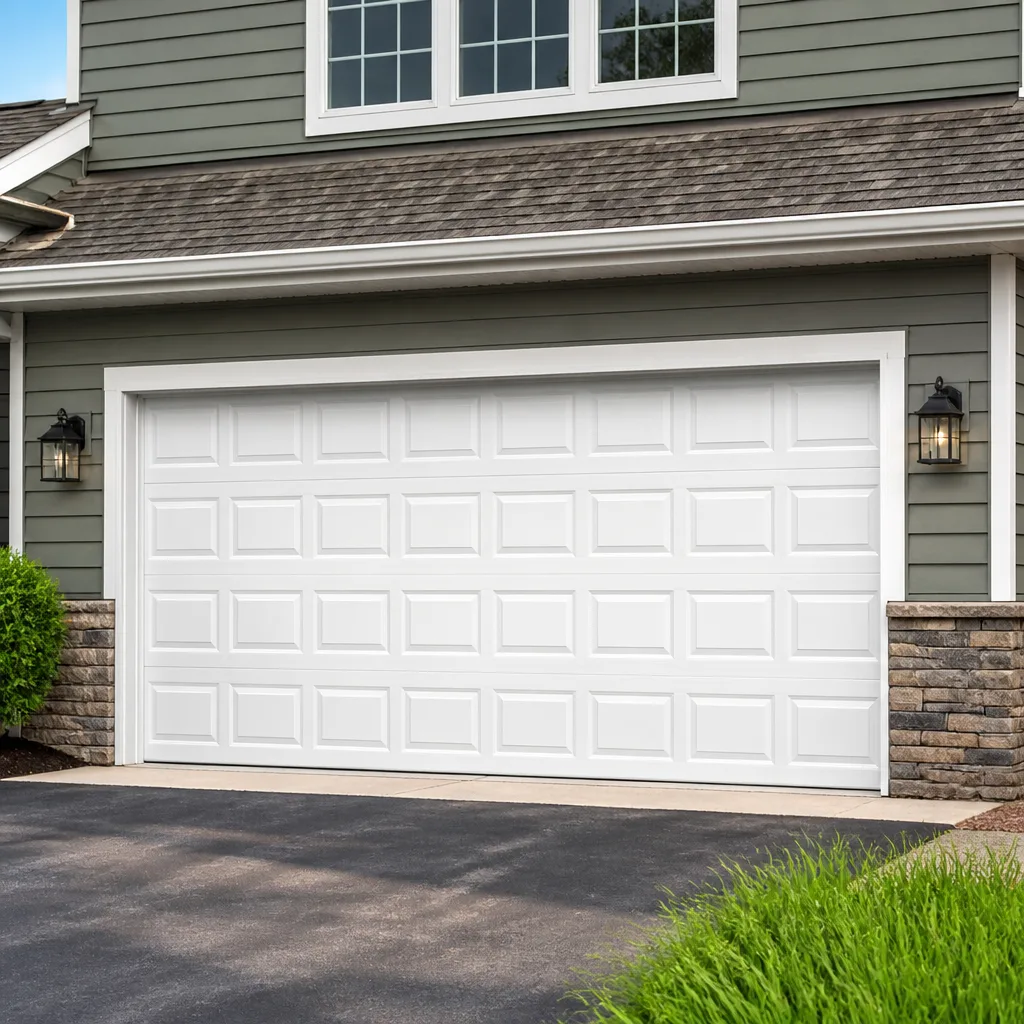 Raised-panel steel
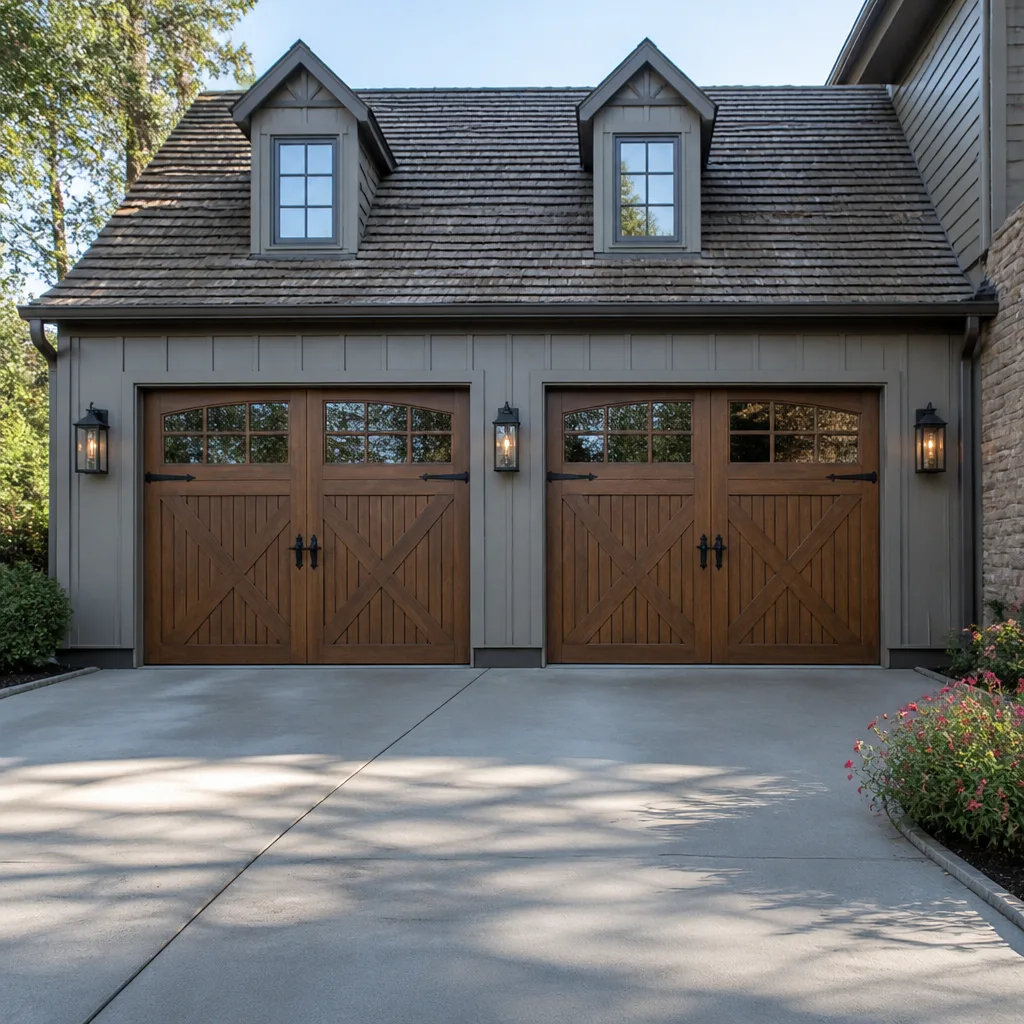 Carriage house
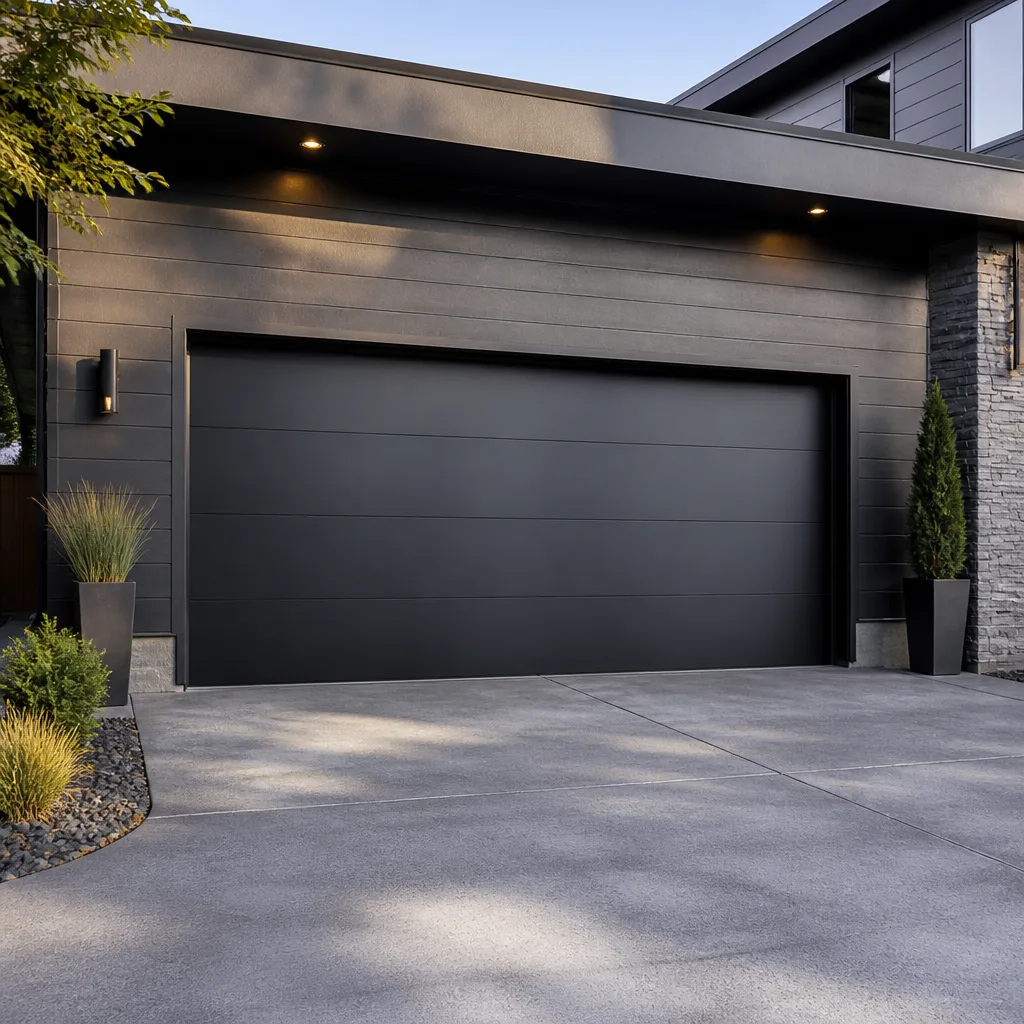 Modern flush
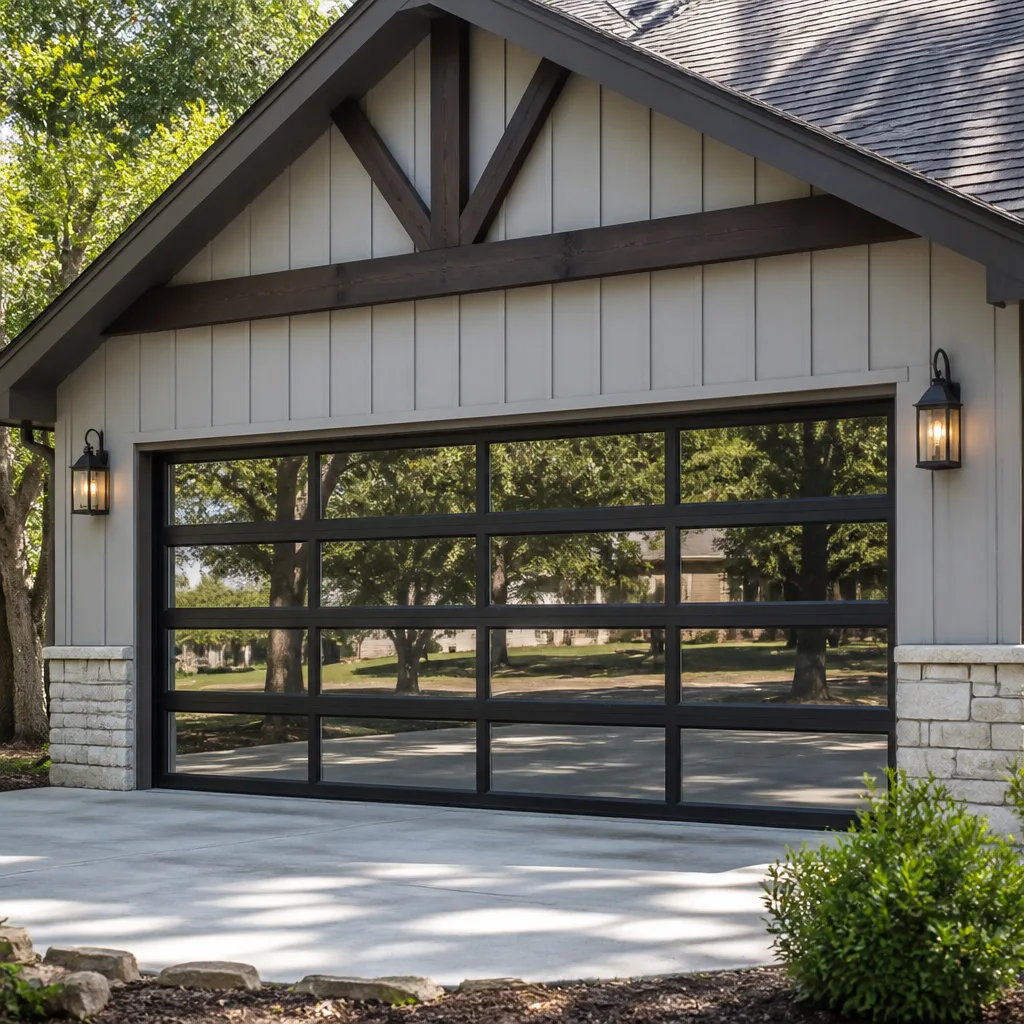 Full-view glass
 LiftMaster openers
 Chamberlain openers
Full 25-point door and opener safety check with every visit - springs, cables, rollers, tracks, and your LiftMaster or Chamberlain opener included
You get a price before we start. It does not change when the pro arrives.
Get your free estimateHow to Hire a Garage Door Contractor in Dale City: A Step-by-Step Guide
Virginia does not require a specialty license for garage door work, which means anyone with a truck, a spring winder and a magnetic sign can legally knock on your door in Dale City and offer to fix your door. That’s the uncomfortable truth most hiring guides skip past. The trade sits in a gap: electrical work needs a license, plumbing needs a license, but hanging a door and winding a torsion spring falls under general contractor rules that many one-man operations simply ignore. So the screening work lands on you. This guide walks through how to check a contractor’s Virginia license, what to ask before you schedule, how to read a written estimate line by line, and how to tell a real written warranty from a verbal promise that evaporates the moment the technician pulls out of your driveway.
Quick Answer
To hire a garage door contractor in Dale City, verify their Virginia contractor license class through the state licensing database, ask five specific questions about OEM parts and warranty terms before booking, get a written estimate that itemizes labor and parts separately, and refuse any quote given verbally or under pressure at your door. The written estimate sets your price, and a legitimate spring or opener warranty is printed on paper, not spoken.
Styles & brands we work with
- Raised-panel steel
- Carriage house
- Modern flush
- Full-view glass
- LiftMaster openers
- Chamberlain openers
Table of Contents
- How Do You Verify a Garage Door Contractor’s Virginia License?
- What Do Virginia Class A, B and C Licenses Actually Mean?
- What Five Questions Should You Ask Before Scheduling?
- What Door-to-Door Red Flags Spike in Northern Virginia?
- How Do You Read a Garage Door Estimate Line by Line?
- What Does a Real Spring or Opener Warranty Look Like in Writing?
- Why Does Brand-Specific Parts Knowledge Matter in Dale City?
- When Should You Stop Troubleshooting and Call a Professional?
How Do You Verify a Garage Door Contractor’s Virginia License?
You verify a Virginia contractor license by pulling the business up in the Department of Professional and Occupational Regulation (DPOR) license lookup, then matching the license class to the dollar value of your job. It takes about three minutes and it’s the single most useful screen you’ll run. Most homeowners skip it because they assume the person quoting has already been vetted by someone. Nobody vets them. That’s on you.
Here’s the process, in order:
- Ask the company for their DPOR license number before you book. A legitimate outfit has it memorized or on hand and doesn’t get defensive when you ask.
- Search that number on the DPOR website. Confirm the name matches the company quoting you, the license is current, and the class is appropriate for the job.
- Check for any disciplinary actions listed on the record. A history of complaints about incomplete work or misrepresented pricing is a pattern, not bad luck.
- Ask for a certificate of insurance showing general liability coverage, and confirm the policy is active. A license doesn’t guarantee insurance.
- Write the license number on your estimate when it arrives. If the number on the paperwork doesn’t match the one you verified, stop.
In Dale City, many garage door jobs fall under the threshold where a specialty license isn’t strictly required, which is why the general contractor classification matters. A spring replacement on a single door might not cross that line. A full door replacement with new tracks and an opener almost certainly does. Knowing which side of that line your job sits on tells you how much verification you actually need. When in doubt, treat it as a licensed job and ask.
The same discipline applies when you’re searching for garage door repair online and landing on the first result. Ranking high doesn’t mean licensed. Verify every time.
What Do Virginia Class A, B and C Licenses Actually Mean?
Virginia issues three contractor license classes, and each one caps the total value of a single project the holder can legally contract for. Class C covers jobs under a lower dollar threshold, Class B covers mid-range projects, and Class A covers the highest-value work. The class tells you the size of job the contractor is legally permitted to take on, which is a useful sanity check when someone quotes you a full door replacement.
Here’s how to use the classes when you’re shopping:
- Class C: Appropriate for smaller jobs, typically a single repair or a minor replacement. Fine for a spring or a panel swap.
- Class B: Covers a broader range of projects, including full door replacements and opener installations on most residential homes.
- Class A: Covers the largest projects. Overkill for most Dale City residential work, but a sign the company operates at scale.
The value thresholds change periodically, so don’t rely on a number you read online (including this page). Ask the contractor which class they hold, then ask the DPOR lookup what that class currently permits. The department publishes the current limits, and the lookup is the authoritative source. If a contractor tells you their class “doesn’t matter for residential,” that’s a yellow flag. It matters if the project value exceeds their cap.
There’s a second layer worth checking: whether the license is held by the business entity or an individual. A business license tied to a company name is more durable than one tied to a person who may move on. Ask whose name is on the license and whether it transfers if the technician you meet leaves the company.
The point isn’t to become a licensing expert. It’s to ask one question – “What’s your DPOR license number and class?” – and check the answer. Contractors who operate cleanly answer without hesitation. Contractors who don’t will change the subject toward price, which tells you everything you need to know about how the rest of the job will go in Dale City.
What Five Questions Should You Ask Before Scheduling?
Five questions separate a contractor who stocks the right parts for your door from one who’ll improvise with a generic spring and hope it holds. Ask them before you book, not when the technician is standing in your garage with the door half apart.
- “Do you carry OEM parts for my door and opener brand?” OEM means original equipment manufacturer – the part designed for your specific system. A Clopay door takes Clopay-spec springs. A Chamberlain opener takes Chamberlain-compatible logic boards and gear kits. Generic substitutes can work, but they wear differently and can void your door’s factory warranty.
- “Will the technician be able to identify my brand and model on site?” A tech who services eight major brands – LiftMaster, Chamberlain, Genie, Clopay, Amarr, Wayne Dalton, Craftsman and Raynor – can look at your opener and know in seconds which gear set or travel module it needs. A generalist has to guess.
- “What’s the warranty on the spring, and is it in writing?” Spring warranties vary wildly. Some cover the part for a set period, some cover parts and labor, some are verbal only. Get it in writing before the work starts.
- “Is the estimate itemized, and does the price change once you see the door?” A legitimate answer is that the written estimate sets the price and any change requires your approval before the work continues. A vague answer here means the invoice will surprise you.
- “Will the person doing the work be licensed and insured as the state requires?” Ask about the actual technician, not just the company. Some operations subcontract, and the sub may not carry the same coverage.
We’ve seen homeowners in Dale City book a company that passed every check, only to have a different crew show up with a generic spring because the original tech was booked. The five questions above are designed to surface that risk early. If a company can’t answer them cleanly on the phone, they won’t answer them cleanly in your garage either.
One more: ask whether they handle both repair and installation. A company that only installs new doors may push you toward replacement when a repair would have lasted years. A company that does both has no incentive to oversell. Our technicians have up to 11 years of experience across that full lifecycle, which is the kind of range you want in the person diagnosing your door.
What Door-to-Door Red Flags Spike in Northern Virginia?
Storm chasers and door-to-door garage door operators spike in Northern Virginia after severe weather, and Dale City sits right in the path. The pitch is predictable: a truck parked at the end of your street, a knock at the door, a claim that they “noticed” your door looks off, and a quote scribbled on a business card. Some of these outfits are legitimate. Most aren’t, and the tactics are designed to close you before you have time to check.
Watch for these:
- Same-day pressure with a discount that expires. “I can do it today for X, but tomorrow it’s more.” No legitimate contractor prices a job based on how fast you decide.
- No written estimate, only a verbal quote. If they won’t put a number on paper before the work starts, the number after the work will be different.
- Cash-only payment. Cash-only is a way to avoid a paper trail, which is a way to avoid warranty claims and licensing complaints.
- Discounting the spring before they’ve seen it. A technician who quotes a spring replacement from your porch hasn’t examined the door. Torsion springs have specific ratings that must match the door’s weight. Guessing is how doors fail.
- An unmarked truck or no business identification. The vehicle should carry the company name, and the technician should be able to produce a business card and a license number on request.
- Insisting on a full replacement when you called about a repair. Sometimes replacement is the right call. But a company that jumps to replacement before diagnosing the actual failure is selling, not fixing.
Northern Virginia’s dense housing stock and rapid turnover in some neighborhoods make door-to-door tactics easier to run than in rural counties where everyone knows the local trades. Dale City’s mix of older single-family homes and newer townhome developments is exactly the kind of area these operators work. The fix isn’t paranoia. It’s a simple policy: no written estimate, no work. No license number, no booking. A real contractor will accommodate both without blinking.
If a door fails after a storm and you’re dealing with an urgent situation, that urgency is precisely when these tactics work best. Slow down. Call a company you’ve verified, or use our garage door repair line and get a written estimate before anything is touched.
How Do You Read a Garage Door Estimate Line by Line?
A written estimate is only useful if you know what to look for, and the two phrases that cause the most trouble are “labor included” and “parts not guaranteed.” Both sound reassuring. Both can leave you paying twice for the same job.
Here’s what each line should tell you:
- Parts, itemized by name and brand. “Torsion spring, matched pair, rated for your door weight” is a real line item. “Springs” is not. If your door has a LiftMaster opener and the estimate says “opener part,” ask which part. Gear kits, logic boards and travel modules are different jobs at different prices.
- Labor, stated separately from parts. “Labor included” is fine if the total is clear and the warranty covers both. It’s a problem when the warranty covers only the part, leaving you to pay installation again if the part fails.
- Warranty terms, on the page. Look for how long, what’s covered, and whether labor is included. If the warranty is only described verbally, it doesn’t exist in any enforceable sense.
- What’s excluded. A good estimate states what isn’t covered. “Does not include track alignment or sensor adjustment” tells you more than a vague “full service” line ever will.
- The total, with the phrase “this written estimate sets the final price.” If a contractor won’t commit to that, the total isn’t a total. It’s an opening bid.
“Parts not guaranteed” is the phrase that should stop you cold. It means if the spring fails in a month, you own the replacement cost, even if the part was defective. A legitimate contractor stands behind the part they install. Ask directly: “If this spring fails in 60 days, what do you do?” The answer belongs on the estimate. If they won’t put it there, that’s your answer.
We quote every job this way: written, itemized, agreed before any work starts, and the written estimate sets the price. If the diagnosis changes once the door is open – and sometimes it does – you get a call and a new number before anything else happens. You never get a surprise invoice. That’s the standard to hold every contractor in Dale City to, ours included.
What Does a Real Spring or Opener Warranty Look Like in Writing?
A legitimate spring or opener warranty is printed, states the coverage period in days or years, names what’s included (parts, labor or both), and explains the process for a claim. A verbal promise is worth nothing the moment the technician leaves, and springs are the most commonly warrantied-and-most-commonly-disputed garage door part for a reason: they’re under constant torsion load and fail without warning when they’re spec’d wrong.
Here’s what a real spring warranty covers:
- Cycle life. Springs are rated in cycles – one up-and-down is a cycle. A standard spring might be rated for a certain cycle count, a high-cycle spring for more. The rating should appear on the estimate. If it doesn’t, you don’t know what you’re buying.
- Matched pair replacement. Springs are usually replaced as a pair, because they’re installed together and wear together. A price quoted for one spring is for one spring. A matched pair costs roughly twice that. Anyone quoting a single range for both is hiding the real number.
- Time period and what’s covered. “Covered for X period, parts and labor” is enforceable. “Fully guaranteed” is not.
- The claim process. How do you file? Who do you call? How fast is a replacement? A warranty with no claim process is a marketing line.
Opener warranties work the same way. LiftMaster and Chamberlain openers have factory warranties that can be affected by how the unit is serviced. If a technician installs a non-compatible part, you may lose coverage on the whole unit. That’s why OEM parts matter – it’s not about brand loyalty, it’s about keeping your existing warranty intact.
Broken springs are dangerous. A torsion spring under tension can cause serious injury if it’s mishandled, and a door that drops unexpectedly is a real hazard. This is not a DIY repair, and any contractor who doesn’t treat it with visible caution – asking about door weight, checking the cable condition, replacing the pair – is cutting corners on the most dangerous part of the job. Call a professional for spring work. Every time.
For a dedicated look at how spring repair actually works and what a proper job involves, see our garage door spring repair page. Opener-specific warranty questions are covered in more depth under garage door opener repair.
Why Does Brand-Specific Parts Knowledge Matter in Dale City?
Brand-specific parts knowledge matters because a Clopay door and a Raynor door don’t fail the same way, and a Genie opener and a LiftMaster opener don’t take the same replacement parts. A technician who services eight major brands – think LiftMaster, Chamberlain, Genie, Clopay, Amarr, Wayne Dalton, Craftsman and Raynor – knows the quirks of each system before they open the toolbox. A generalist learns your door on your dime.
Consider what this looks like in practice:
- Clopay doors have specific panel profiles and track geometry. Matching a replacement panel to an existing Clopay door requires knowing the model line, not just measuring the opening.
- LiftMaster and Chamberlain openers share a lot of architecture but differ in their logic boards and travel modules. A tech who works both knows which parts interchange and which don’t.
- Genie openers use a different drive system in many models, and older Genie units have quirks that generic parts don’t account for.
- Craftsman and Raynor units often show up in older Dale City homes, where the age of the system makes parts matching harder and brand familiarity more valuable.
Dale City’s housing stock spans several decades, which means you’ll find Clopay panels on one street and a ’90s-era Craftsman opener two doors down. A company that stocks or sources OEM parts for all of those systems can diagnose and repair in one visit. A company that only carries generic replacements will either retrofit a workaround or tell you the whole door needs replacing. Neither is what you want.
The shortcut here is simple: ask which brands the contractor services, then ask for a specific failure mode for your brand. “On a Clopay door, what causes the bottom section to bind?” A tech who knows the brand will answer. A tech who doesn’t will pivot to price. Whether you have a Genie opener or a Clopay panel, the company should be able to tell you how their repair differs from the generic version.
When you’re ready to talk to someone who works on your brand, Dale City Garage Door Repair handles repair through installation across those eight brands, and we’ll tell you whether repair or replacement makes more sense before we quote either.
When Should You Stop Troubleshooting and Call a Professional?
You should stop troubleshooting and call a professional the moment you see a broken spring, a door that’s hanging off one side, or a garage door that won’t stay up on its own. Those three scenarios involve stored mechanical energy or a structural failure, and none of them improve with more tinkering. A door that’s off its tracks or a spring that’s visibly snapped is a stop-and-call situation, not a weekend project.
The less obvious cases matter too. A door that reverses before closing might need a sensor adjustment, which is a small job. A door that opens three inches and stops might have a spring that’s lost tension or a logic board issue – a much larger job on a LiftMaster or Chamberlain unit. A noisy door might just need lubrication, or it might be a worn roller that’s about to fail and drop the door. The diagnosis is what you’re paying for when you call.
Emergency service exists for exactly the situations where a stuck door creates an immediate problem – you can’t get the car out, the house isn’t secure, or something’s visibly wrong and you don’t want to touch it. Call us at (844) 766-2325. We answer 24/7. Fast dispatch from 7am to 7pm, Sunday through Friday. Estimates in Dale City are free, and the written quote sets the price before any work starts.
Common Mistakes to Avoid
- Accepting a verbal quote. A number spoken on your porch isn’t a price. It’s a suggestion that changes once the door comes apart. Ask for it in writing, itemized, before anything is scheduled.
- Not checking the DPOR license. Virginia doesn’t require a specialty garage door license, which means the general contractor license is your only screening tool. Three minutes on the state lookup is worth more than an hour of reading online reviews.
- Treating a one-spring quote as a pair price. Springs are replaced in matched pairs because they wear together. A range quoted for one spring is for one spring. Ask explicitly whether the estimate covers the pair.
- Believing a verbal warranty. “We guarantee our work” is not a warranty. A warranty states a period, a coverage scope, and a claim process on paper. If it isn’t on the estimate, it isn’t enforceable.
- Booking the cheapest bid without asking about OEM parts. A generic spring can work, but it may fail sooner and can affect your door’s factory coverage. Price matters, but parts identity matters more.
- Letting a door-to-door operator pressure you after a storm. Northern Virginia sees a spike in door-knocking after severe weather, and Dale City is a frequent target. The discount that expires today is a sales tactic. No legitimate contractor prices a job based on your decision speed.
- Assuming the technician who arrives knows your brand. Ask on the phone which brands the company services. If your door is a Clopay and the answer is “we handle all makes,” ask for a specific Clopay detail. A real specialist will give you one.
See the difference
 Before
 After
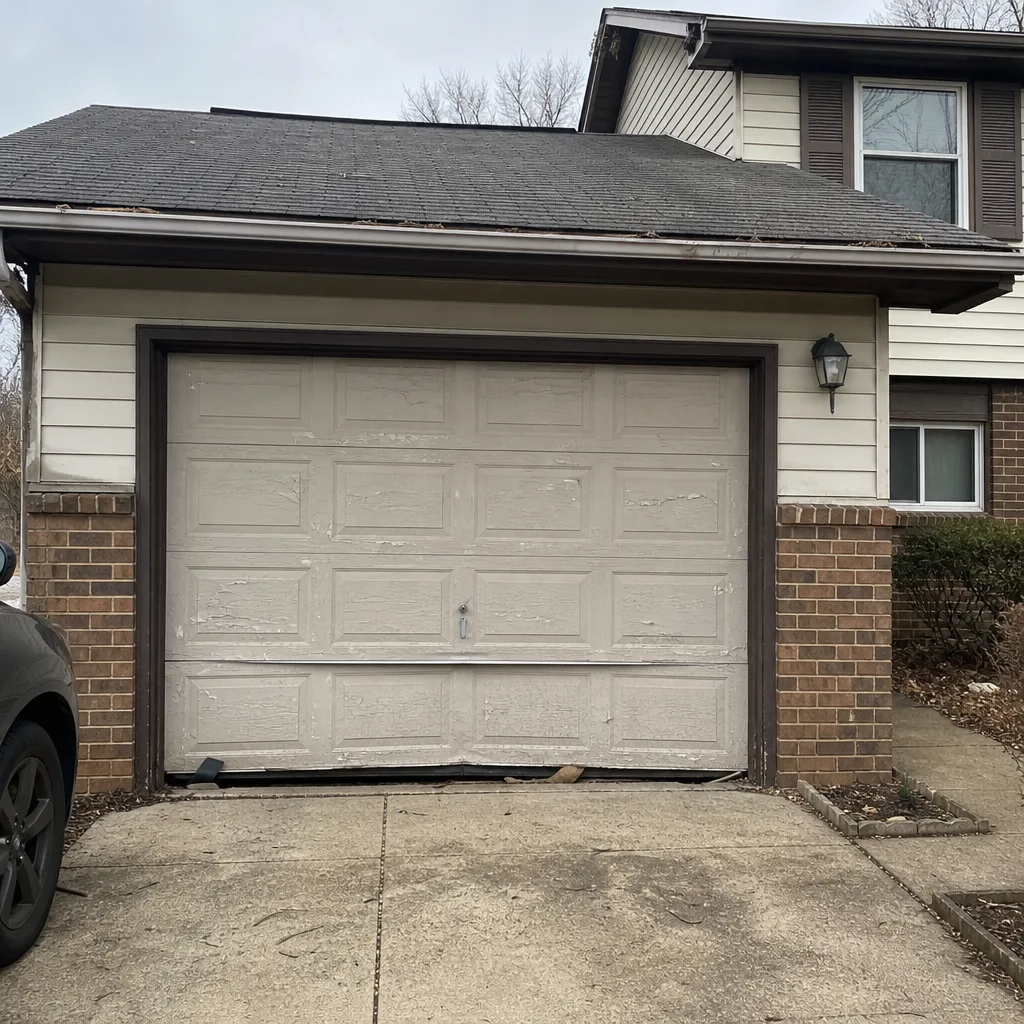 Before
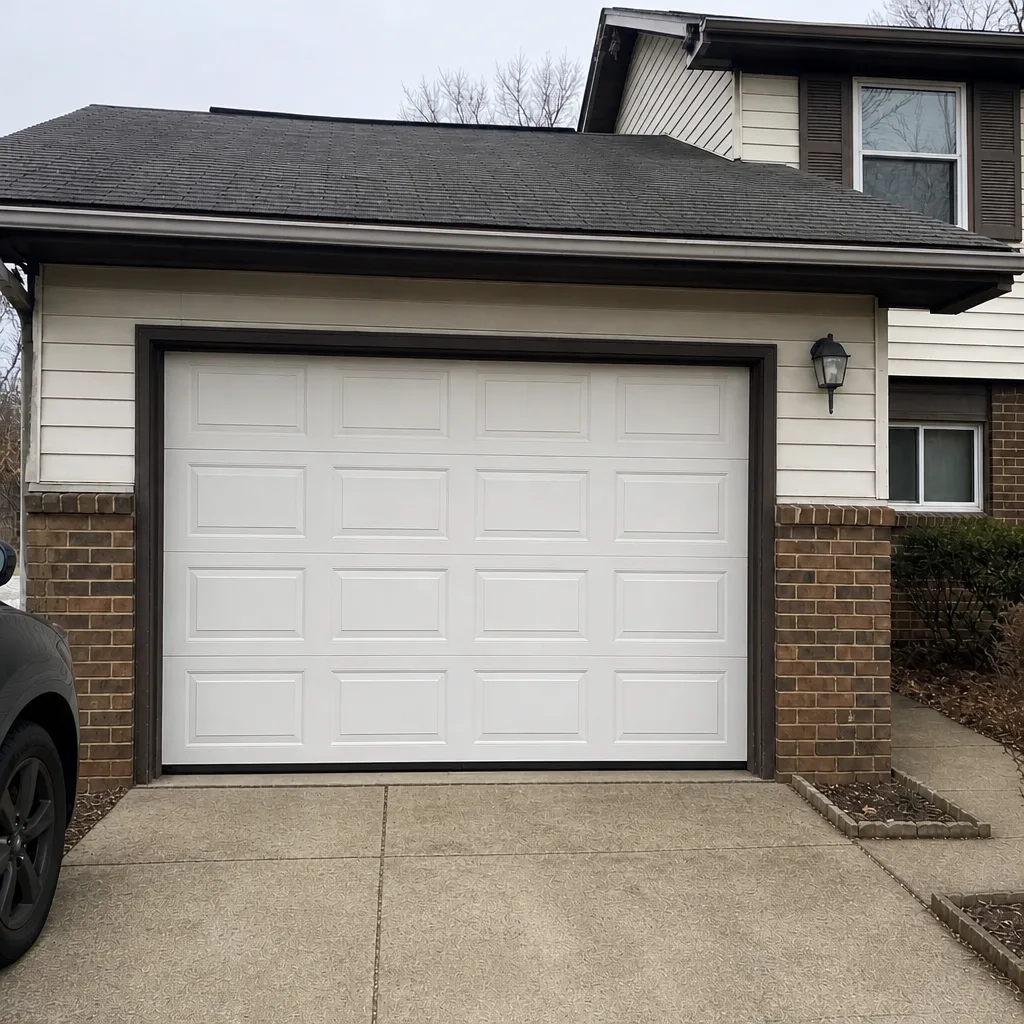 After
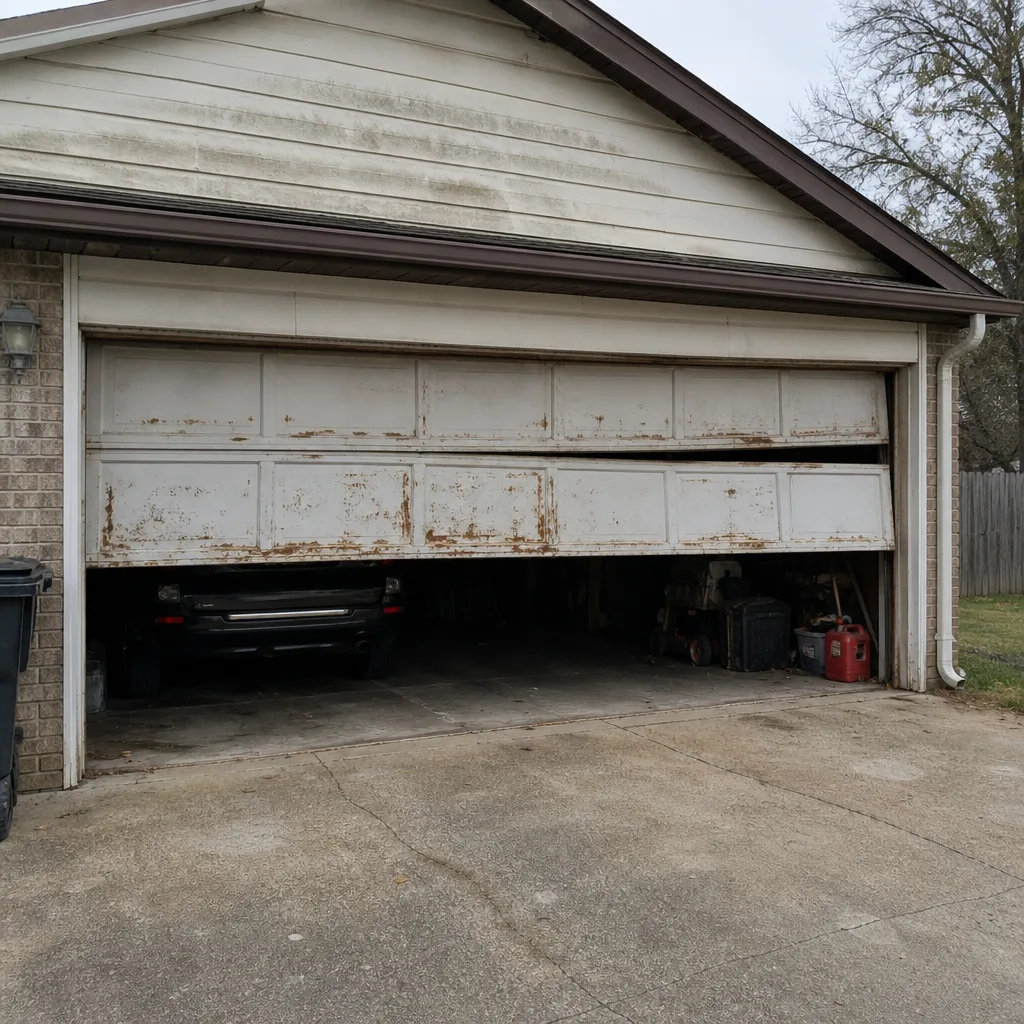 Before
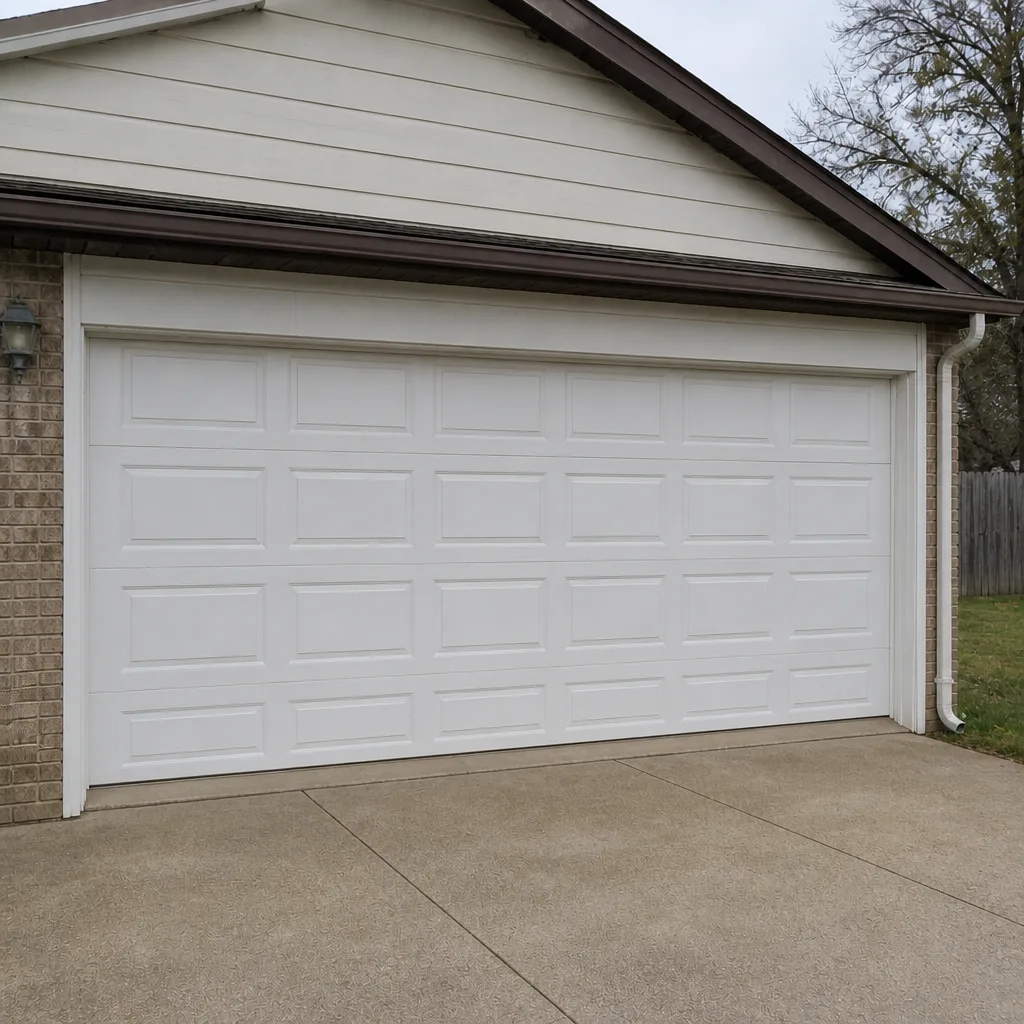 After
When to Call a Professional
Call a professional when you can see the problem and it involves a spring, a cable, or a door off its track. Those are the jobs where stored mechanical energy makes DIY repair genuinely dangerous. Also call when the door stops mid-travel, reverses unexpectedly, or makes a sound it didn’t make last month – those symptoms point to opener or roller issues that get worse with use, not better. The same rule applies to an opener that’s lost its programming and won’t take a reset, or a door that’s sagging at one corner. A trained technician diagnoses these in a single visit, and the written estimate tells you what the fix costs before anything starts. Dale City Garage Door Repair offers free estimates in Dale City – call (844) 766-2325. We answer 24/7, with fast dispatch from 7am to 7pm, Sunday through Friday.
Frequently Asked Questions
Ask for the company’s Virginia DPOR license number and class, then verify both on the state’s license lookup before booking. Confirm the name matches, the license is current, and the class covers your project’s value. A legitimate contractor provides this without hesitation; one who deflects is telling you something. Call (844) 766-2325 for a free estimate with the license information in hand.
A single torsion spring replacement typically falls in the low-to-mid hundreds of dollars depending on the door’s size and weight, with a matched pair roughly double a single-spring price. Springs are usually replaced as a pair, so ask whether the quote covers one or both. Your written estimate sets the final price. Call (844) 766-2325 for an exact quote – estimates are free.
Same-day service is available for repair calls, and emergency service handles situations where a stuck door creates a security or safety problem. Call (844) 766-2325. We answer 24/7. A call outside dispatch hours is booked into the next opening, Sunday through Friday, 7am to 7pm.
No – the written estimate sets the final price, agreed before any work starts. If the diagnosis changes once the door is opened, you get a call and a revised number before anything else happens. You never get an invoice bigger than the quote. Call (844) 766-2325 for a free written estimate.
The local professionals we connect you with are licensed and insured as their state requires, and you should ask for the same documentation from any contractor you hire, including the technician who shows up. A written estimate should carry the license number. Call (844) 766-2325 to book a free estimate.
A standard single-door installation is usually a one-day job once the door is on site, and a double door can run longer depending on the opener and track work. Installation is measured, ordered and scheduled rather than same-day, so the first step is a free measure and a written price. Call (844) 766-2325 to schedule yours.
The Bottom Line
Hiring a garage door contractor in Dale City comes down to three checks. Verify the Virginia contractor license and its class through the DPOR lookup. Ask five specific questions about OEM parts and written warranty terms before you book. And read the estimate line by line, confirming the written quote sets the final price and that the spring warranty covers parts, labor and a claim process on paper. Skip the door-to-door pitch and the verbal quote, and don’t choose on price alone without knowing whether the technician carries parts for your brand. Whether you’re searching for a spring fix, an opener repair, or a full replacement, the contractor who answers these questions cleanly is the one worth calling.
Ready for a written estimate from a team that works on your brand? Call Dale City Garage Door Repair at (844) 766-2325 for a free estimate. We answer 24/7, with fast dispatch from 7am to 7pm, Sunday through Friday. Whether you have a LiftMaster opener, a Clopay panel, or a Genie system that’s stopped responding, we’ll tell you what’s wrong and what it costs before any work starts.
Written by the team at Dale City Garage Door Repair.