
Last updated November 23, 2026
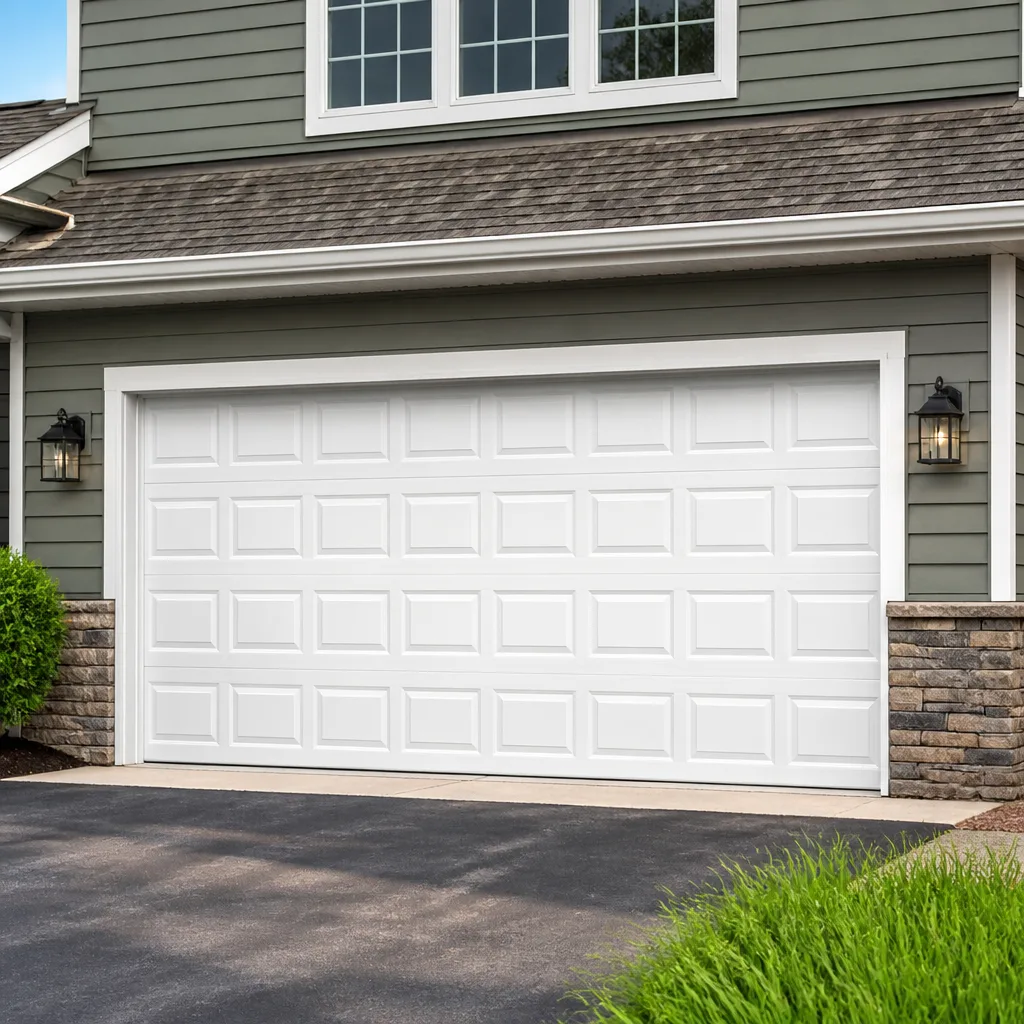 Raised-panel steel
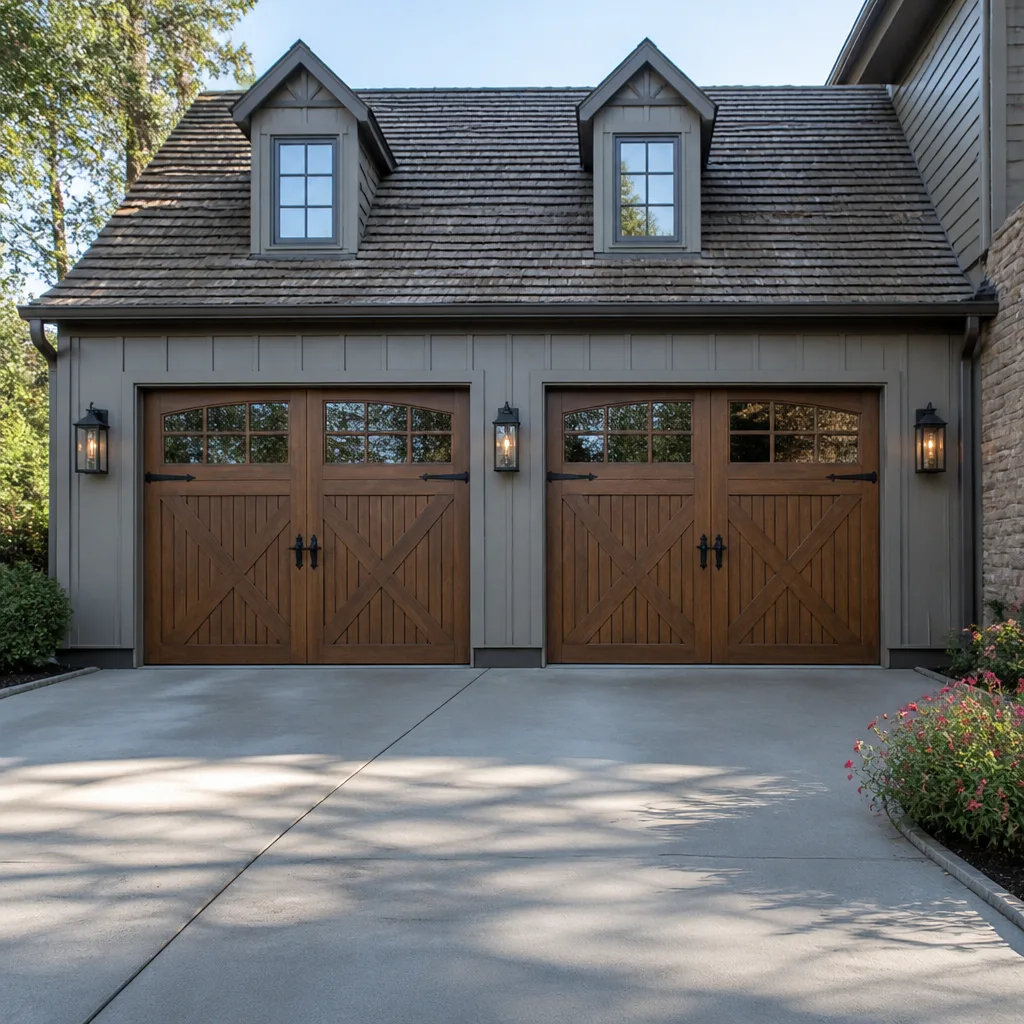 Carriage house
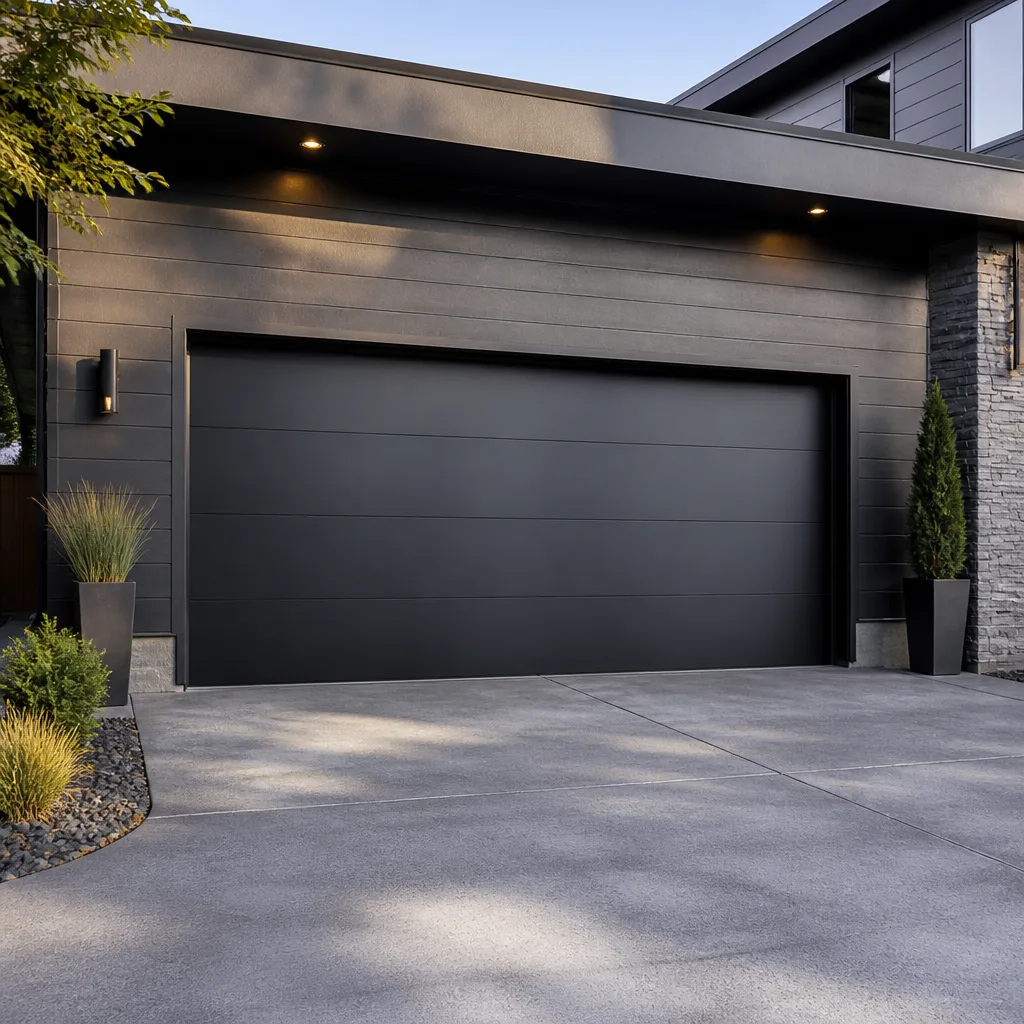 Modern flush
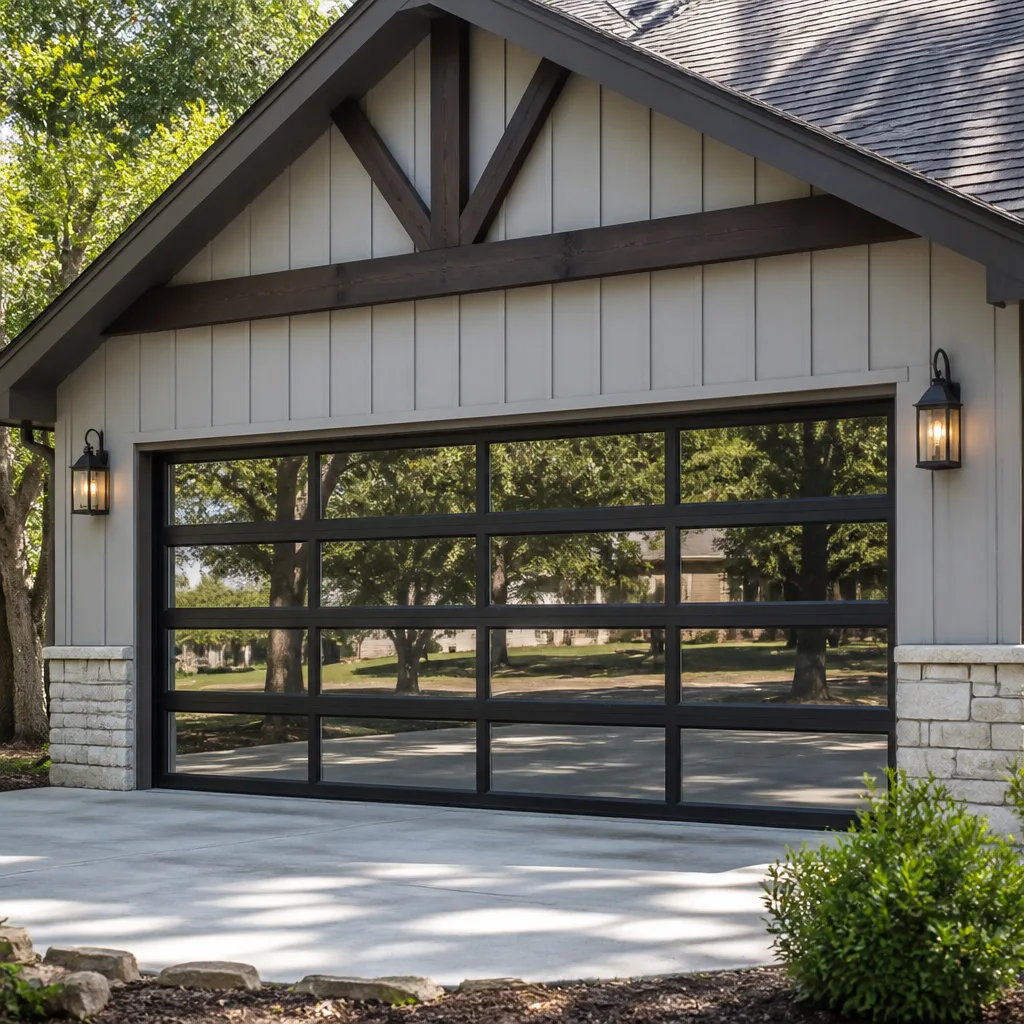 Full-view glass
 LiftMaster openers
 Chamberlain openers
Full 25-point door and opener safety check with every visit - springs, cables, rollers, tracks, and your LiftMaster or Chamberlain opener included
You get a price before we start. It does not change when the pro arrives.
Get your free estimateGarage Door Repair Maintenance Schedule: What to Do and When
Lubricating your garage door once a year feels productive. But if you’re reaching for the same can of grease for the hinges, the track, and the torsion spring, you may be speeding up wear instead of preventing it. A garage door isn’t one machine – it’s a set of components that fail on very different clocks. Springs cycle, rollers wear, cables fray, and seals compress at their own pace. This guide lays out a maintenance schedule built around those cycles, with the exact products for each part, the seasonal adjustments that matter in Northern Virginia, and the tasks best left to a trained technician. Whether your door carries a Clopay panel or runs on a Wayne Dalton opener, the rhythm below is what keeps it moving.
Quick Answer
A well-run garage door gets a light monthly inspection, a quarterly lubrication and balance check, and a full annual service covering springs, cables, rollers, hinges, and the opener. Parts with known service life – like torsion springs rated to a specific number of cycles – are tracked separately so you replace them before they fail rather than after.
Styles & brands we work with
- Raised-panel steel
- Carriage house
- Modern flush
- Full-view glass
- LiftMaster openers
- Chamberlain openers
Table of Contents
- How a garage door wears out: the component cycles that matter
- The full maintenance schedule at a glance
- Which lubricant belongs on which part
- The monthly visual inspection punch list
- Seasonal adjustments for Northern Virginia
- Maintenance that can affect your warranty
- Cycle math for a typical Dale City household
- Common mistakes to avoid
How a Garage Door Wears Out: The Component Cycles That Matter
A garage door has moving parts that die on schedules, not on whims. Understand the schedule and you stop treating every breakdown as a surprise. The biggest failure driver is the torsion spring. Springs are rated by cycle count – the number of open-and-close trips they’re designed to survive before fatigue takes over. A standard-rated spring handles a set number of cycles; a high-cycle spring is built for far more. The spring almost always fails at the worst possible moment because a broken spring doesn’t send a warning letter. It just snaps.
Cables are the second component to watch. They run alongside the spring system under constant tension, and their failure mode is fraying – individual strands break before the whole cable gives out. That’s why a visual inspection is worth doing. A frayed cable is a caught-early problem; a snapped one is an emergency.
Rollers, hinges, and bearings wear more gradually. Steel rollers develop flat spots and get noisy. Nylon rollers last longer but crack with age. Hinges loosen and metal-to-metal contact develops. The opener’s gears, drive belt or chain, and safety sensors round out the system, and those have their own wear cycle depending on the brand – a Genie opener’s drive system ages differently than a belt-driven unit.
- Torsion spring: rated in cycles; replace proactively near end of rating.
- Cables: inspect for fraying monthly; replace at the first sign of strand separation.
- Rollers: expect deterioration over years; replace in sets, not one at a time.
- Hinges and bearings: lubricate and tighten on the quarterly schedule.
- Opener drive and sensors: test monthly; service annually.
This is why a maintenance schedule beats a repair-it-when-it-breaks approach. When you service parts on their cycle, you catch deterioration while it’s still a maintenance item. When you wait for a failure, you’re paying for emergency garage door service and possibly a damaged panel from a door that came down hard.
The Full Maintenance Schedule at a Glance
Here’s the whole schedule in one place. Print it, tape it inside the garage, and work down it. Most homeowners find the monthly items take ten minutes and the quarterly items take twenty.
Monthly
- Run the door a full open-close cycle and listen for new noises.
- Visually check cables, springs, and the track for obvious damage.
- Test the safety reverse: place an object in the door’s path and confirm it reverses.
- Check the safety sensors’ indicator lights for alignment.
Every Three Months
- Lubricate hinges, rollers, and the torsion spring (with the correct product – see below).
- Wipe the track clean and check it’s plumb; never grease the track.
- Tighten hinge and bracket bolts that have worked loose.
- Test the balance: disconnect the opener and lift the door halfway. It should hold.
Annually
- Full professional service covering springs, cables, rollers, and opener mechanics.
- Replace any rollers showing flat spots, cracks, or excess noise.
- Inspect and adjust the opener’s force and travel settings.
- Check the bottom seal for compression and cracking.
On the Cycle Interval
- Replace torsion springs at or near their rated cycle life, before failure.
- Replace cables at the first sign of fraying – not “next time.”
Here in Dale City, most families put their door through more cycles than they realize, and that pushes every interval on this list a little tighter. The next section breaks down the numbers.
Which Lubricant Belongs on Which Part
The single most common DIY mistake we see is using one lubricant everywhere. Different materials need different products, and the wrong one does real damage. Here’s the mapping.
Track: the metal curved guide is not a lubricated surface – it just needs to stay clean. Wipe it with a damp cloth. Greasing the track attracts dirt that binds the rollers.
Rollers: use a dedicated garage door roller or white lithium spray on the roller bearings only, not the roller surface. A few quick shots per roller is plenty.
Hinges and pivot points: white lithium grease or a silicone spray works well. Apply, then cycle the door so the lubricant spreads.
Torsion spring: a light silicone spray or dedicated spring lubricant. Avoid heavy grease that grabs grit. Never use a rag or your hand around a torch-tensioned spring – and never attempt to adjust the spring yourself. That’s a job for trained technicians because torsion springs are under extreme tension and can cause serious injury.
Chain-driven opener: white lithium grease is appropriate here, since the chain is metal on metal and the grease stays in the moving parts. Belt- and screw-drive openers: use what the manufacturer specifies – some systems specify a light grease on the screw drive, and belts should never be greased. This is where knowing the specific opener matters; a Chamberlain or LiftMaster belt unit behaves differently from a screw drive.
Rubber seals: a silicone-based conditioner, not grease and not lithium. Lithium destroys rubber over time, hardening it and speeding up cracking on the bottom seal. This is the exact opposite of what many homeowners assume.
- Track: clean only, never grease.
- Rollers: roller or white lithium spray on bearings.
- Hinges: white lithium or silicone.
- Spring: light silicone – and never touch the spring itself.
- Chain opener: white lithium. Belt opener: nothing.
- Rubber seal: silicone-based rubber conditioner only.
The Monthly Visual Inspection Punch List
The monthly walk-around catches problems while they’re cheap. Here’s the punch list to run each month. If you find a frayed cable or a visible crack or break in a spring, stop and call for professional help – those are not items to “watch.”
- Cables. Look at both sides where the cable winds around the drum. A healthy cable looks smooth and uniform. Fraying shows up as individual wires separating or a fuzzy appearance. That’s your warning.
- Springs. With the door closed, look for gaps in the coil or a coil that looks separated. A gap means the spring has broken.
- Rollers. Watch the rollers as the door moves. Listen for grinding, look for flat spots, wobble, or a roller that’s come out of the track.
- Hinges. Check for loose screws, cracks, or metal that’s bent.
- Track. Look for dents, bends, or debris. A bent track will drag the door and stress the whole system.
- Bottom seal. Run your hand along the bottom seal. It should meet the floor evenly. Gaps mean it’s compressed or damaged.
- Safety reverse and sensors. Put an object in the door’s path and confirm it reverses. Check that both sensor lights are lit.
Turn this into a real punch list you check off. If you’d like a version to keep in the garage, ask us when we’re out for a service call – we’ll hand you one. Running the list takes less time than finding your registration and insurance card.
Seasonal Adjustments for Northern Virginia
The climate here has two real seasons for a garage door, and each stresses it differently. Northern Virginia runs humid summers and cold winters, and each demands its own adjustment.
Winter: Spring Tension and Cold-Weather Creep
Cold shrinks metal. The torsion spring system, the track, and the opener’s moving parts all contract slightly in cold, and that can make the door feel heavier and the opener work harder. A door that felt fine in October can start hesitating, straining, or reversing on the safety test in January. The fix is usually a slight force adjustment on the opener – but if the door has gotten stiff, it’s often a sign the spring is fatigued. Check the balance test before calling it an opener problem.
Summer: Humidity and Bottom Seal Compression
Summer humidity swells wood components, softens rubber faster, and makes the bottom seal more prone to sticking. If you find the bottom seal compressed or gaping, replacing it restores the weather seal and keeps out moisture and pests. The other summer watch item is the safety sensors – humidity and debris occasionally interfere with the sensor optics, so recheck alignment when the door starts reversing on its own.
Spring and Fall
These are the best windows for the annual professional service. The door isn’t fighting extreme temperatures, so adjustments hold better. If you’re planning a new door installation, do it in mild weather when the new seal can settle properly. Clopay, Amarr, and Wayne Dalton all install cleanly in these windows.
Maintenance That Can Affect Your Warranty
Here’s a point most homeowners never hear: certain maintenance tasks, done incorrectly, can affect manufacturer warranty coverage. That’s why we handle the parts of a service call where mistakes are expensive.
Warranty-related concerns usually fall into a few buckets:
- Spring adjustment. Touching or re-tensioning a spring with the wrong tools or method risks both injury and spring damage. A broken spring from an improper adjustment may not be covered.
- Opener force and travel settings. Forcing an opener to work past its designed limits can void coverage on the motor and drive components.
- Using the wrong lubricant. Grease on a rubber seal or the wrong product in a belt drive can cause damage a manufacturer may decline to cover.
- Altering the track. Bending or cutting a track to force a fit can compromise the whole door’s alignment and warranty.
The safest approach: check with whoever services your door before attempting anything that involves the spring, the opener’s internals, or track adjustment. For doors under warranty, keep records of who serviced the equipment and when.
Cycle Math for a Typical Dale City Household
“Cycles” sounds abstract until you do the math for a real household. Every open-close pair is a cycle, and a typical family runs several per day. Two cars coming and going, a package drop-off, taking out the trash – it adds up.
A rough rule of thumb: a two-car household where both cars leave and return once a day runs four cycles per car per day, or about eight per day. Add errands, deliveries, and the kids, and you’re looking at around ten cycles a day. Ten times 365 is roughly 3,600 cycles a year. Over several years, that’s a substantial chunk of a spring’s rated life.
Here in Dale City, with a car-dependent pattern and plenty of deliveries, doors cycle heavily. A standard-rated spring will serve through a set number of cycles, and high-cycle springs exist precisely because busy households need more. The takeaway: if your household is running the door hard, you should be on the shorter end of every interval, and you should track your spring’s cycle rating rather than waiting for a snap.
When a spring does go, it’s rarely a quiet affair. It’s a loud bang, a door that won’t lift, and an emergency call. That’s the exact scenario this schedule is meant to prevent.
Common Mistakes to Avoid
- Greasing the track. It feels like it should help, but grease captures grit and binds the rollers. Wipe it clean and leave it dry.
- Using one lubricant everywhere. Lithium grease on a rubber bottom seal destroys it. White lithium on a belt drive does nothing helpful. Match the product to the part.
- Forcing the door manually when it’s stuck. If the door won’t budge, something is broken – usually a spring or a cable. Pulling on the door won’t fix it and may cause it to fall.
- Ignoring the safety reverse test. This is the cheapest safety check you can do. If the door fails to reverse, stop using it until it’s fixed.
- Watch-and-wait on a frayed cable. Frayed cables are an early warning. Waiting turns a preventive fix into an emergency repair.
- DIY spring repair. Springs are under extreme tension. This is the one maintenance task to leave to trained technicians, every time.
- Skipping the balance test. A door that won’t hold halfway is straining the opener. Catch it before the opener fails too.
See the difference
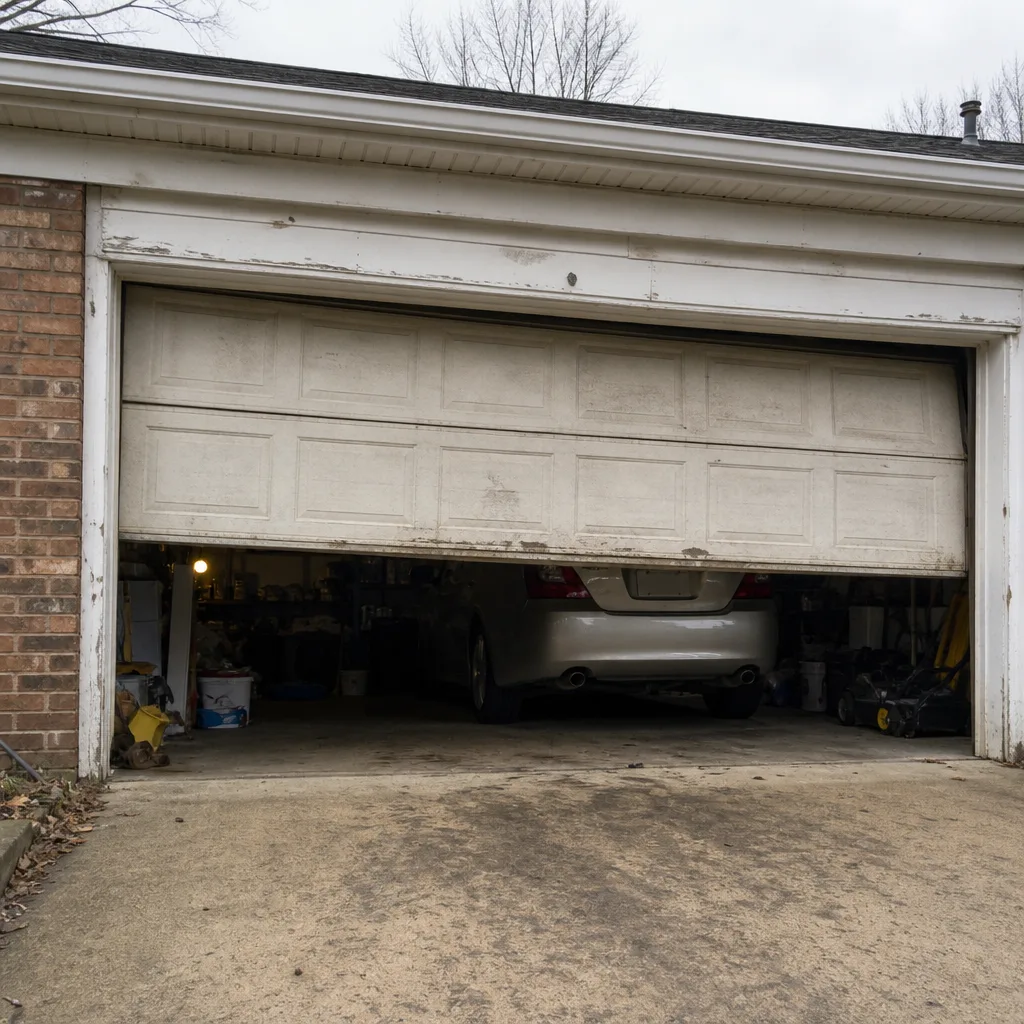 Before
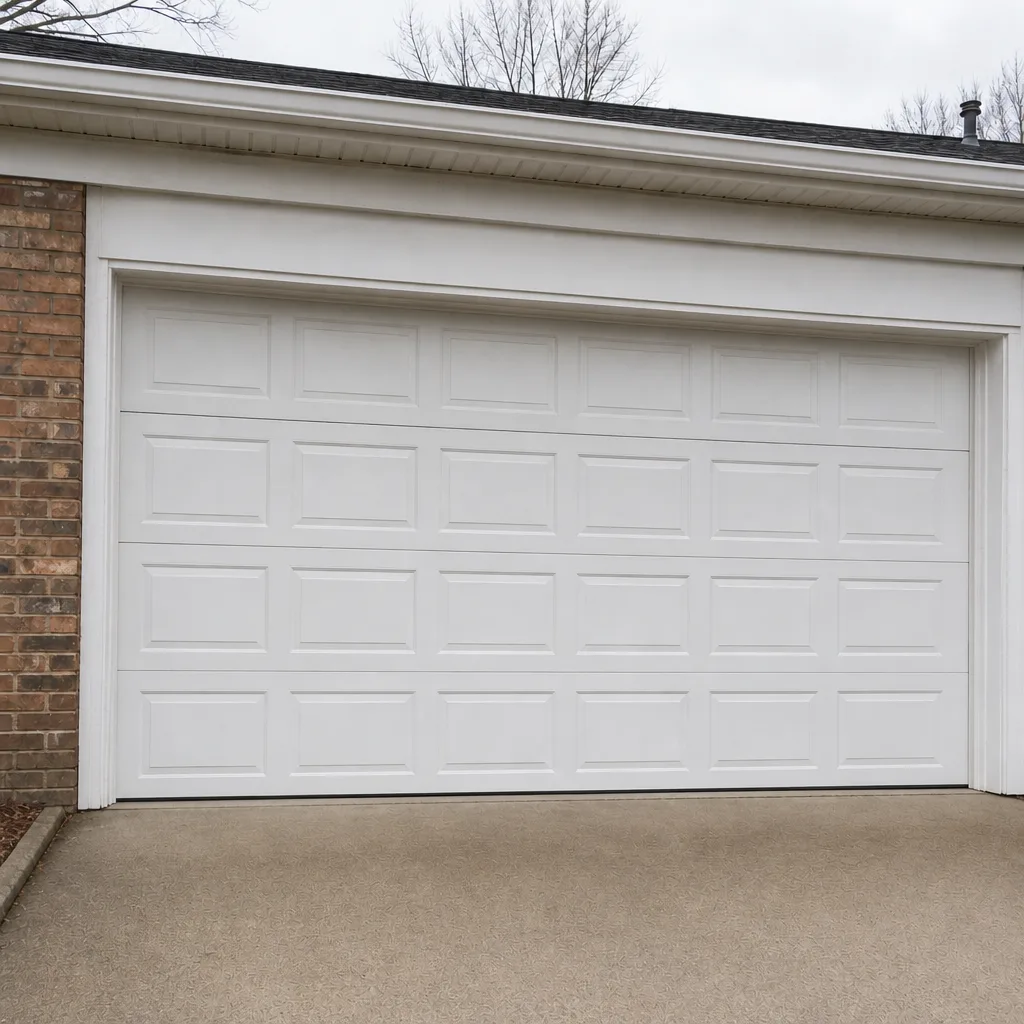 After
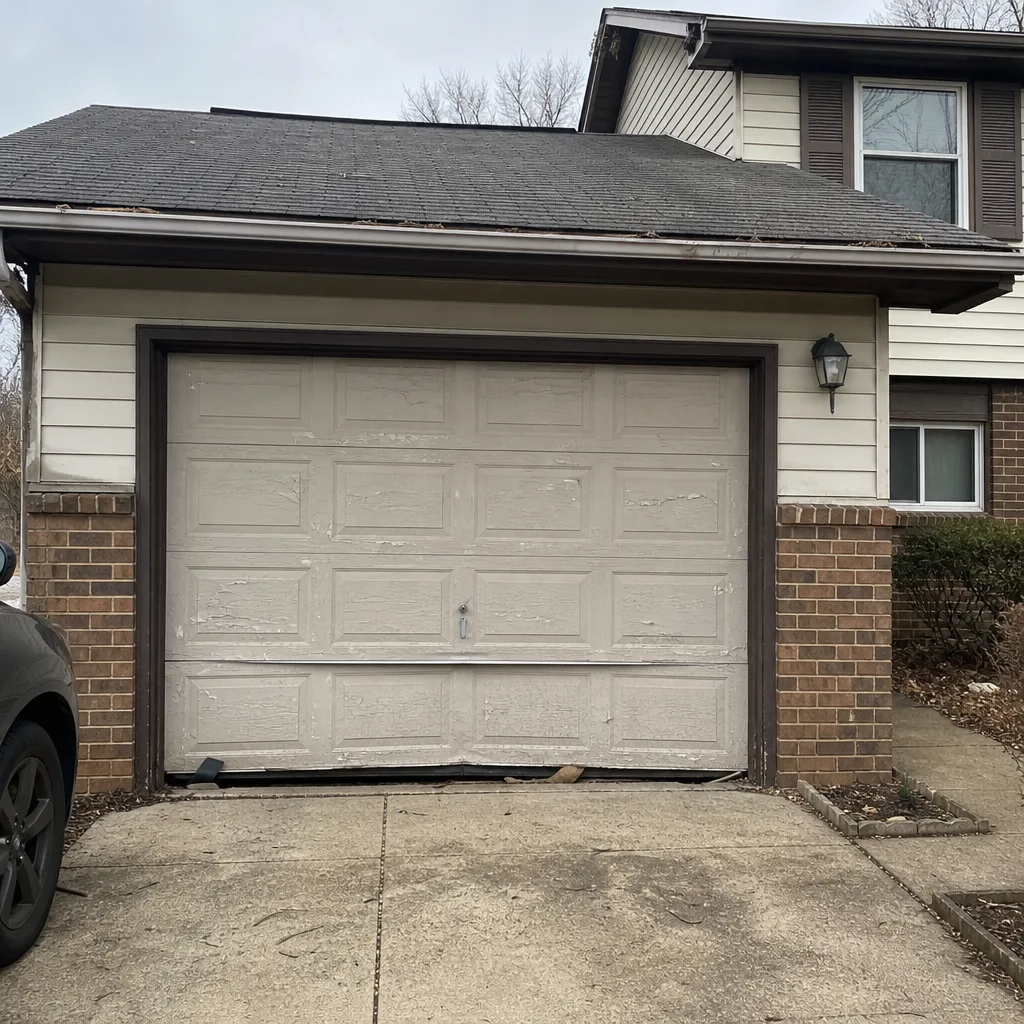 Before
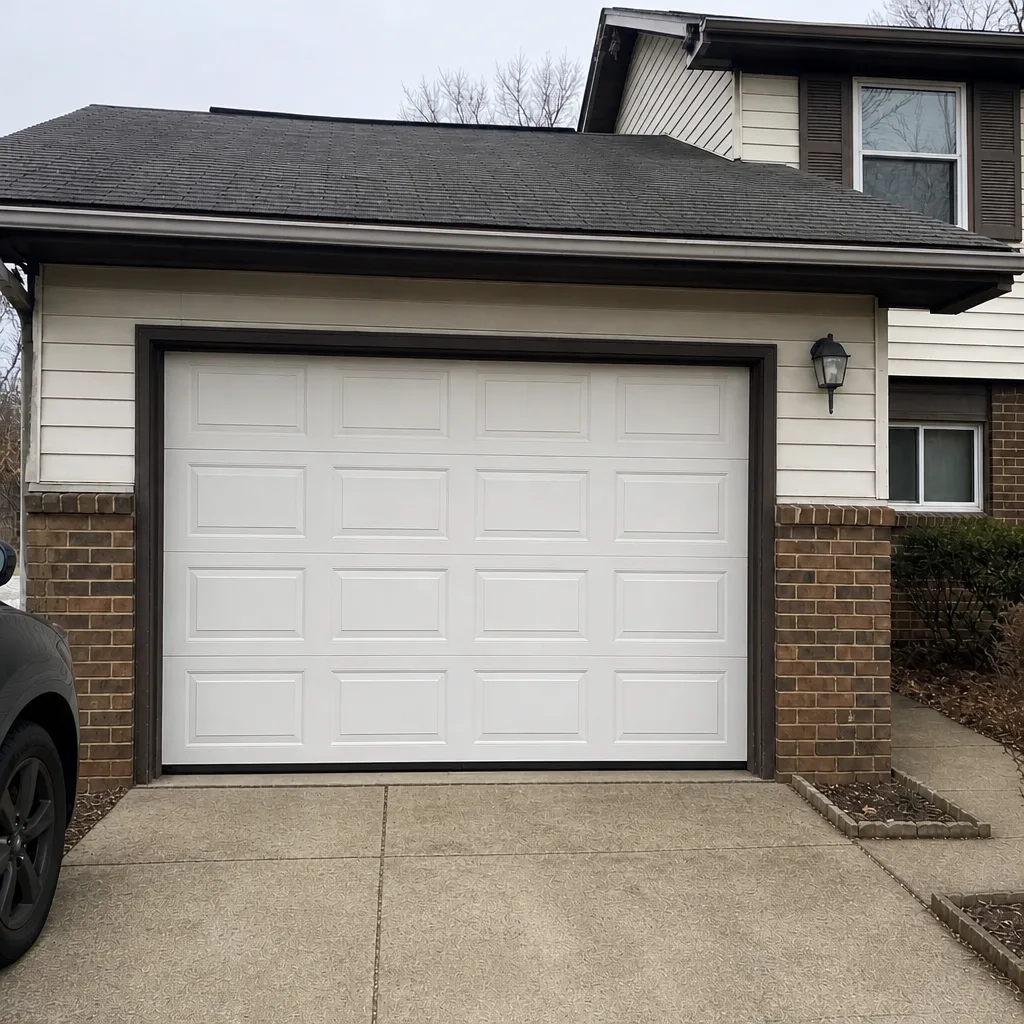 After
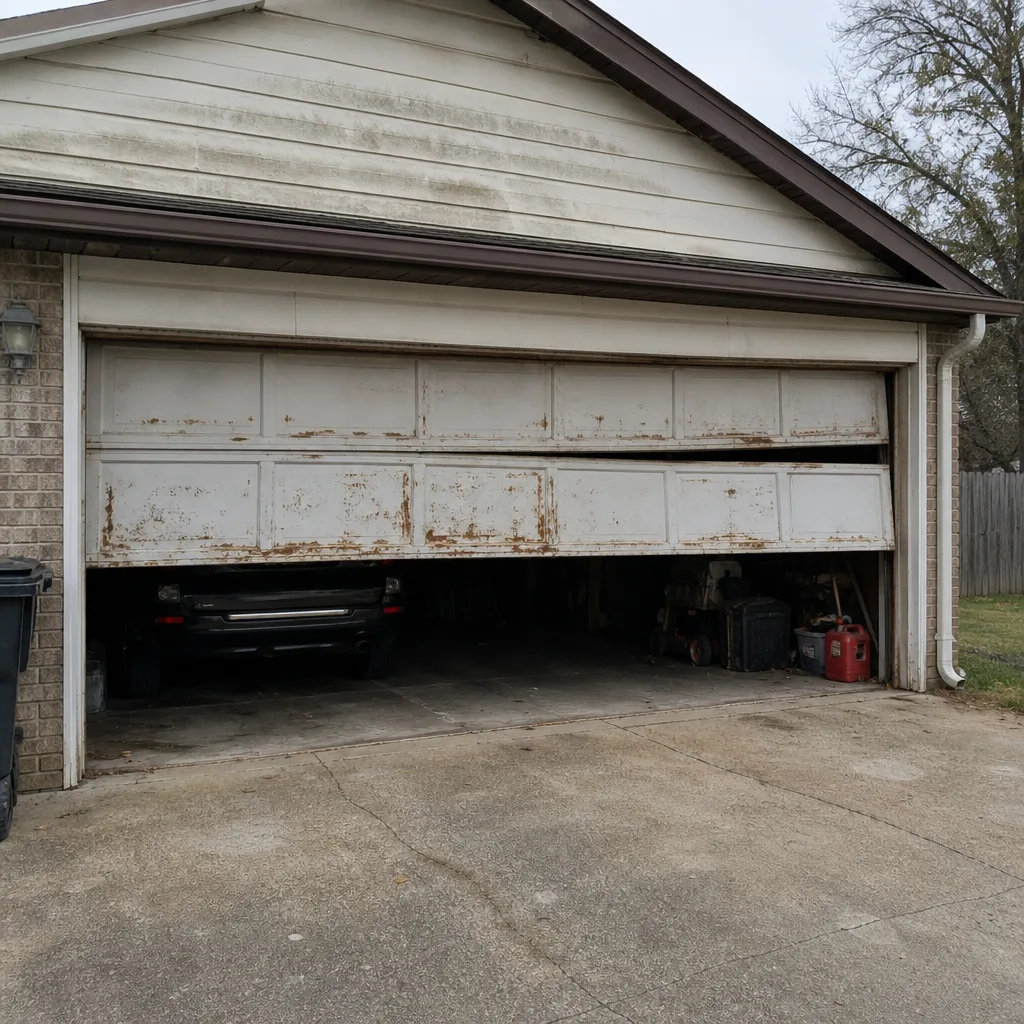 Before
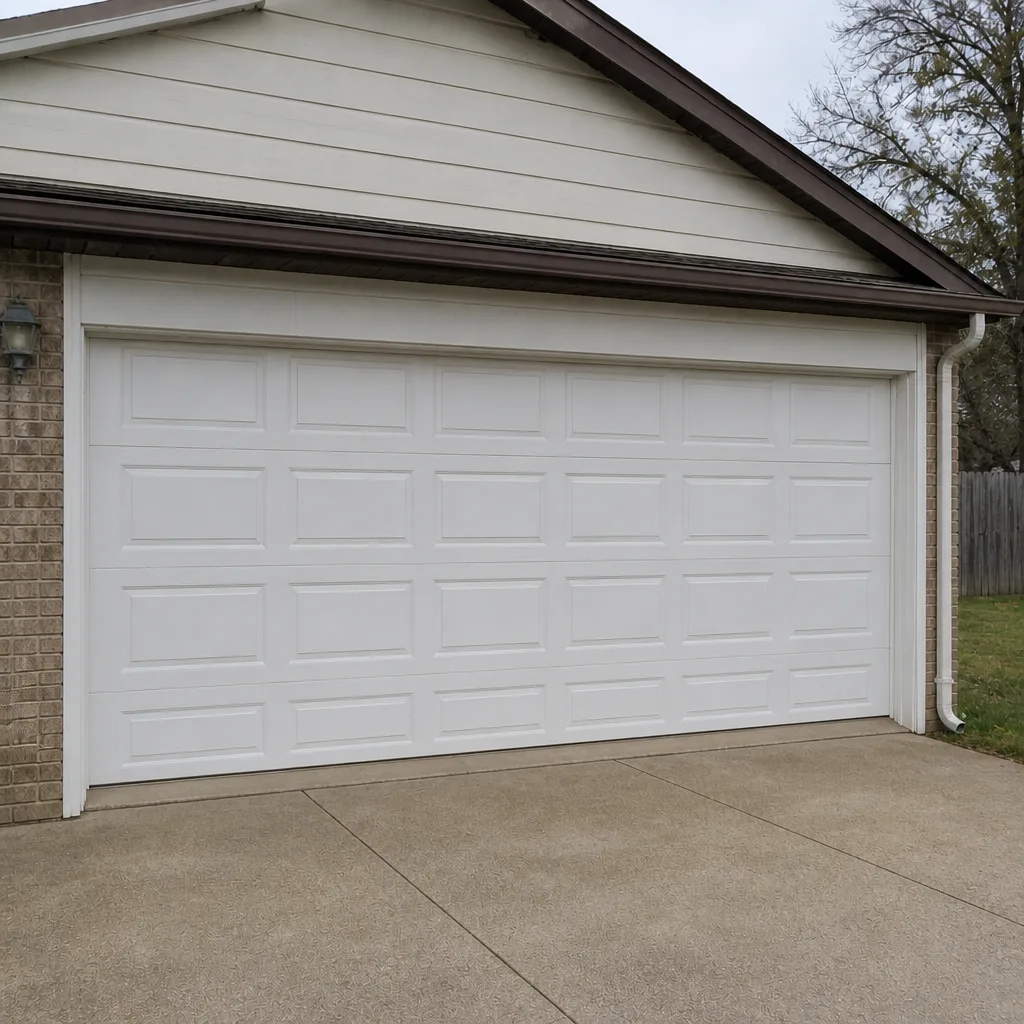 After
When to Call a Professional
Some maintenance is homeowner work; some belongs to a trained technician. Call us when: you find a frayed cable or broken spring; the door won’t hold its balance test; the opener is straining or reversing on its own; the safety reverse fails; a panel is dented or cracked; or the door is simply getting hard to operate. We service every major brand, so whether you have a Genie opener, an Amarr panel, or a Chamberlain smart system, we’re working on your equipment, not guessing at it.
Our technicians have up to 11 years of experience across LiftMaster, Chamberlain, Genie, Clopay, Amarr, Wayne Dalton, Craftsman, and Raynor systems. We answer 24/7, and for urgent situations we offer emergency garage door service with fast dispatch from 7am to 7pm, Sunday through Friday. The estimate is free and the price is set by the written estimate before any work starts.
If your door needs garage door repair, or you suspect a broken spring, call us at (844) 766-2325 for a free estimate in Dale City.
Frequently Asked Questions
A working garage door should get light maintenance monthly, lubrication every three months, and a full professional service once a year. Busy households that cycle the door often should follow the shorter end of every interval. If a part is getting stiff or noisy, don’t wait for the annual visit.
Skipped maintenance shortens the life of springs, cables, and the opener, and it turns predictable wear into emergency breakdowns. The door may fail at an inconvenient moment with a snapped spring or frayed cable. A regular schedule prevents most of those calls rather than just postponing them.
You can lubricate hinges, rollers, and the track (which needs cleaning, not greasing) yourself with the correct products. Avoid touching the torsion spring – that’s a trained-technician job because of the tension involved. Use silicone on rubber seals and never lithium grease.
Torsion springs are rated in cycles, not years, so the lifespan depends on how often your door runs. A typical household running about ten cycles a day will wear through a standard-rated spring in a number of years that high-cycle springs are built to extend. Track your spring’s rating rather than guessing.
Call for garage door spring repair if you see a gap in the spring coils or the door won’t lift. Call for garage door repair if the door is out of balance, grinds, reverses on its own, or a panel is damaged. If you have an opener problem, we handle garage door opener repair across every major brand, modern and legacy alike.
Improperly adjusting the torsion spring, forcing the opener past its settings, using the wrong lubricant, or bending the track can all affect coverage. For a door under warranty, have a trained technician handle spring and opener adjustments and keep a record of service. For everything about our service, visit Dale City Garage Door Repair.
The Bottom Line
A garage door doesn’t wear evenly, so a maintenance schedule built around real component cycles is what keeps it running. Watch cables and springs monthly, lubricate the right parts quarterly with the right products, and book a professional service annually. Seasonal care matters here in Dale City – cold winters tighten the system and humid summers stress the seals. Track your spring’s cycle rating instead of waiting for a snap. And when a spring, cable, or opener needs attention, have a trained technician handle it. Call (844) 766-2325 for a free estimate. We answer 24/7. Fast dispatch from 7am to 7pm, Sunday through Friday. The written estimate sets the price before any work begins.
Written by the team at Dale City Garage Door Repair.